by Donnie Darko
This post was written on July 25, 2020
It is perhaps pretentious and, most certainly, unscientific the way we ascribe meanings and summaries to decades as we do. Yet something about the years between 2010-2019 is more perfect for this habit than perhaps any other recent 10-year period that we refer to as a “decade”. This period has been bookended by two major events, which is not always so cleanly the case (ex. WW1 started in 1914). The financial crisis hit its peak in 2008, but the show didn’t really stop until 2009 after the immediate effects and attempted solutions (and their effects) were more evident. Whatever comes after 2020, we do know that we entered the “2020s” with a crisis. This might have started with the COVID-19 outbreak, but it is clear there are more problems than just the virus, and the virus has created more problems than itself. The period in between these calamitous events ended up being a transition, leading from one world to the next. The change signified the end of the way things were and the beginnings of what might come to pass.
Three figures came to mind recently when thinking about the past ten years. I was looking back on my own life during this era, thinking about my career and social life and how it is odd they fit nicely against the backdrop of the external environment – the economic, political and cultural developments that took place over the same time frame. The previous decade will always bring the greatest memories of my life, alongside some of the darkest in an equal counterpunch of regret. I think similar could be said about all three of these men I thought of, and the decade itself. The future feels a lot more serious and a lot less fun than the past ten years, despite the hard times that did occur. Each of these men were impacted by the period and came out of the decade very differently than they came in. Perhaps we all do, but their transitions represent some important macro themes that we are facing today and they played very central roles while the change occurred. The men that best symbolise the “2010’s” for me are a former hedge-fund manager, a world leader and an obscure blogger out of America.
High-times Hugh
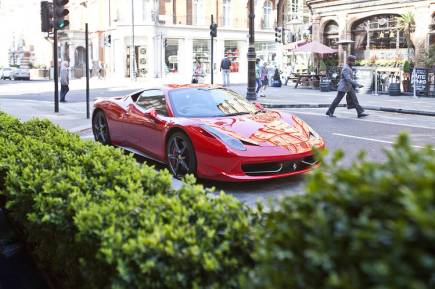
Many fortunes were created in the first decade of the 21st Century. The years before 2010 were boom time for hedge funds. Volatility was wild throughout the decade as opportunities presented themselves in emerging markets and commodities, while financial innovation flourished. Financial institutions of all stripes did well and then a few hedge funds hit the jackpot when they bet against those financial institutions during the 2008 financial crisis. Hugh Hendry was one of those men.
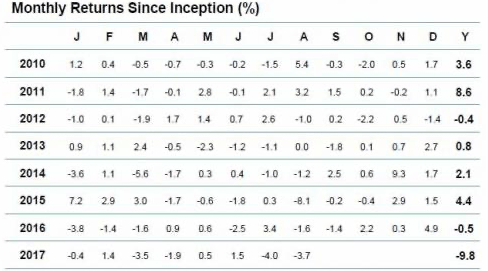
Hendry launched his Eclectica Hedge Fund in 2002, in the midst of a financial boom. Hedge funds were the places to be in those days. MBAs would clamour over each other to get employed by them. Hendry’s reputation skyrocketed when he became one of a few benefactors during 2008, and was perhaps the most well known of those winners residing outside the US. His fund generated >30% annual return while markets plummeted.

As his profile rose, Mr. Hendry gained the reputation as a contrarian and didn’t shy away from debate immediately after the 2008 crisis, most notably here and here. The early part of the decade was an age where there was a mix of awe and anger at the likes of Hendry and others such as John Paulson. The former was often invited by conferences, financial and regular media to share his opinions between 2010 and 2012. It was peak Hedge Fund, although the fame in finance always comes too late if performance isn’t sustained. Things were about to change.
In the aftermath of the global crisis, Europe took centre stage as Greece became the weakest link that threatened to impose a cancer on the Euro. Hendry seemed very bearish, particularly about Europe. When European Central Bank President Mario Draghi made his “whatever it takes” statement in 2012 developed markets started to disconnect with fundamentals and logic. It was at this time that hedge fund managers lost control while central bankers took the wheel. Hendry is as much a symbol for this dynamic than any other. His fund, which was up for the year to July in 2012, then fell in to the red each month for the rest of the year after the markets were comforted by Draghi’s speech. It was from here on that being a bearish speculator was no longer a winning strategy. Particularly for a high-fee 2/20 structure like that of hedge funds. Although nobody could imagine at the time, the era of legendary hedge funders was becoming a thing of the past.
Hendry then u-turned and became bullish. As markets, buoyed by central banks, began to skyrocket with no limit, his meagre returns were not enough to justify an expensive model and redemptions increased. As of 2013, assets under management for his fund totalled over $1 billion. By the end of the decade, in August 2019, this totalled just over $30 million. Returns went from meagre to negative in 2018 and 2019. Hendry would close the fund in September 2019.
The implications of the new “forever bullish” financial markets contributed towards the closing of many hedge funds. As Hendry put it himself in his farewell letter:
But it is bad news for me because funds like mine are required to demonstrate negative correlation with risk assets (when they go up like this I go down…), avoid large drawdowns and post consistent high risk adjusted returns.
Eclectica wasn’t alone as hedge fund liquidations outpaced launches with regularity by the end of the decade. The age of the big winning hedge funds was over. Hendry retired to the island of St. Bart’s and many younger financiers who were just not old enough to fully participate in the wild ride of the 00’s are left wondering what could’ve been had they been born 10 years earlier.
Not that this is to suggest Hendry was a part of it, but that era of high flying financiers with its wild lifestyle, parties and massive bonuses is now for the history books. A cultural era of finance that perhaps rivals the roaring 20’s in terms of excess. The previous decade saw it slowly unravel. The attraction of passive investing became the norm. After all, why pay someone exorbitantly to earn returns lower or equal to what you can get from an index tracker?
Not only being a hedge funder, but a contrarian philosophy was also exposed as a losing strategy over the past ten years. Hendry was both. He entered the decade a high flyer who had the capital and confidence to express what he really thought. He went out quietly after conforming to forces that were beyond his control.
We may one day experience the era that preceded 2010 again. But it won’t be for a while. With the growing inequality, increasing acceptance of Modern Monetary Theory and another crisis creating unemployment in a wide array of industries, we are likely to undergo a period of a shift in power towards labour and from capital. This, it might turn out, was foreshadowed by the political and societal changes during the 2010s that have resulted from income disparities created by our financial system.
The previous ten years, using a distant lens of Mr. Hendry’s experience, could be deemed the era that slowly killed the big speculative investors and the contrarian model. It also highlights the massive inequalities that remain in society. Hedge Funders still had their money and could easily retire to exotic lifestyles despite a decade of meagre performance. Many of those big hitting investors might have gone away quietly, but inequalities still remain. That is not to say it is the fault of those who ran hedge funds, but the anger of regular people didn’t retire or exist in a vacuum. The financial markets were not entirely dead, but the way in which it had been understood by so many before 2010 is. Unfortunately, that transformation has done nothing to distill the fury of the citizenry, or improve humanity.
 Siloviki