By Jim Malone
This post was written on August 15, 2020.
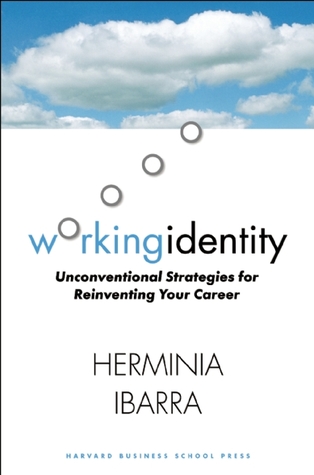
I just completed reading Herminia Ibarra’s book Working Identity and a lot of the themes and theories she described resonated. Many of the stories as well. One individual described in the book couldn’t quite eliminate the option of going back to similar work during his transition, but he was motivated by wanting something different. This individual divides ideas into conformist and nonconformist roles, reaching out to company’s he admires about the possibility for freelance work. I have taken a similar approach as I evaluate my options.
I have had a varied career, working in the Energy industry, Investment Banking and in Emerging Market / SME debt financing. All of the above fit into the commercial finance box. More importantly, it fits into the traditional full-time role that was the expected path. As a result, my skills are what they are. I am working on adding others (undergoing a Master’s in Modern History, learning to code), but we are where we are today. So I have to be realistic. That means I will be using my current skills for a full-time job with a corporation or large sized company (conformist), or I will freelance and keep my options open, developing them as I go along (non-conformist). The goal with the latter is to establish what is called a portfolio career.
Similar to the story in Working Identity about a former I-banker that breaks free but still finds himself interviewing for similar jobs, I have found myself continually drawn to job postings for full-time roles at flashy institutions. Slowly I have been able to weed some of these out, so I leave room to evaluate my non-conformist options. Thus, I haven’t closed off going back to similar roles completely. I am still evaluating headhunters in the asset management and commercial finance industry. I will still look at job postings that would require me sitting in a tower-building-with-open-plan-office. However, I will not look at anything Emerging Markets-related or Energy-related. This is what fits under the conformist umbrella – full time jobs using my skill set.
On the other hand, I am trying to move towards a portfolio career. This is what I originally thought was a fantasy, but as I have come to evaluate this option it feels more plausible every day. At first it just sounded like an idea, now it feels more like my preferred goal. For this to work, I am considering only part-time jobs and those businesses that are more likely to be open to such a possibility – small businesses, startups, small consultancies and charitable or impact-driven organisations. At the same time, I have been in conversations with those that freelance consult. It has given me awareness as to how viable an option that is for me.
The latter option is clearly what I set out to do when I decided I needed to make a big change after getting let go at work. It just feels right. It’s also not an end destination, it is a continually-evolving journey. It does not present the certainty and fixed position of a full-time job with Ivory Tower Co. I have found that each day it becomes more apparent I would rather have that flexibility and variability even if it comes with an increase in stress.
Yet I am still considering jobs in the old style, and anyone listening or reading this might reasonably wonder why that is? Why would I consider going back to this?

It might be as simple as described in Working Identity, that it takes time to evolve into your new self. Also, this process of transition isn’t very well understood by those of us that have been trained into thinking about career growth a certain way over the last 30 years. As the writer reminds us:
“the compartmentalised self-assessment and linear sequence implied by…popular approaches fail to take into account the most important aspect of the reinvention process: that we learn in iterative, multilayered ways” (Ibarra, pg 32, 2003).
So what do I do from here, now that I know the two lifestyle options that are in front of me? It should be noted that I did follow the “popular approaches” of undergoing personality self-assessments and development approaches. They were helpful, but only in giving me exercises in which I had to think about what I would like to do. The assessments alone don’t really do anything. However, those, in combination with my gut instinct is what led to me to consider a portfolio career.

But what really needs to be done now is the preparation for actual testing. Like the ex-I-banker referenced in Ibarra’s book, I will be cold approaching companies that I admire (that is, of the smaller nature). Looking for ways to help them in any facet. This could lead to part-time work, or opportunities for more freelance work. Eventually it could even lead to a full-time role, but ideally one in which I am choosing based on a relationship that has been established. Not a blind application that sounds more and more like a wing and a prayer when I think about it and look back on my life. Yes, some companies on my list are a bit too similar to things I have done in the past. If I am to accept this is an iterative approach, then that is par for the course as far as I am concerned.
I developed a screening method to score some of these companies. This is based on the fit with my skills, my interest level (or excitement level is a better choice of words) and the opportunity available from the perspective of perceived openness towards speculative applications and growth in the business (as far as I can tell from internet research). I will limit the list to 20 to start with. Then begin approaching. This will straddle both the full-time and part-time or freelance options.
Then there is the network building. At the same time, I will be reaching out to contacts that are currently freelancing or that have portfolio careers. These are new relationships I will be trying to establish. I will not be relying on old contacts that will just consider me for old positions, so this is solely for the non-conformist approach. There are some I could even partner up with for freelance work. If this gains traction faster than the cold-approach of companies, it might pull ahead and eliminate options for any full-time work.
Working together, these approaches should help to present some clarity depending on the results I get.
“We use information from two sources: our gut (our emotional reactions) and the people around us (their responses to our trials and efforts).” (Ibarra, pg 61, 2003).
 Siloviki
Pingback: Covid and Career Change: Ep. 4 | Siloviki